
About our bees
Native Welsh black bees, bred to survive here
We keep native-type Welsh black bees, selected for how well they cope with a wet, mild Welsh year, without chemical treatments.
Where our bees came from
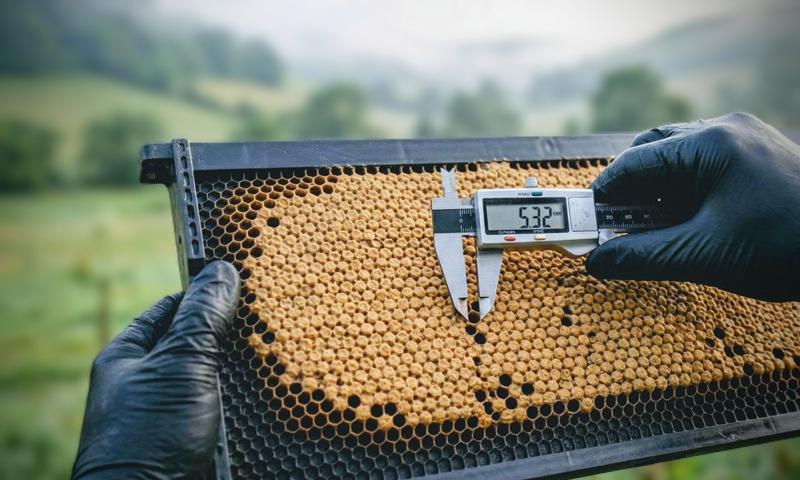
Our stock came to us on its own: wild colonies that moved into empty hives at the end of 2021. They have come through around four years with no chemical treatments, no feeding and no propping up. What survived that is adapted to local weather and mite pressure, and those traits are what we breed from.
They are dark, hardy Apis mellifera mellifera-type bees, selected for local survival rather than for a purity certificate. Our queens are open mated with drones from our own survivor apiaries.
Breeding uses our own queen rearing and naturally captured local swarms. With careful monitoring and record keeping we select for Varroa Sensitive Hygiene (VSH) traits rather than relying on chemicals.
- Main apiary
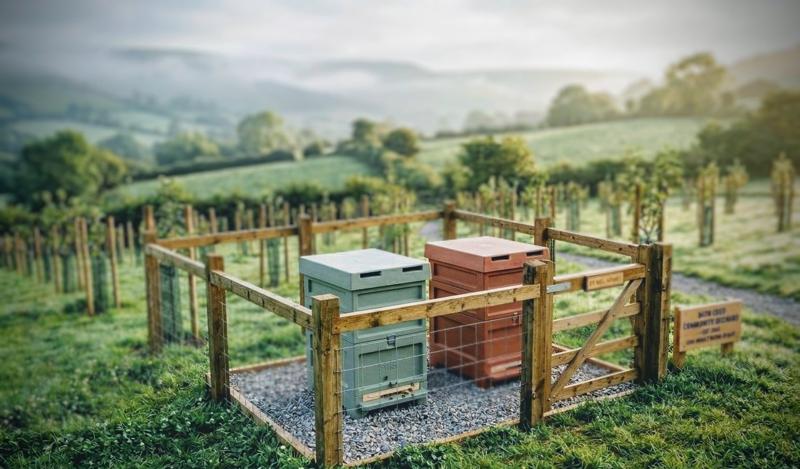
- Greenmeadow Community Farm, CwmbranOur scientific and educational apiary
- Other sites
- Across Torfaen and Blaenau Gwent
- Method
- Chemical-free, selecting for Varroa resistance
- Footprint
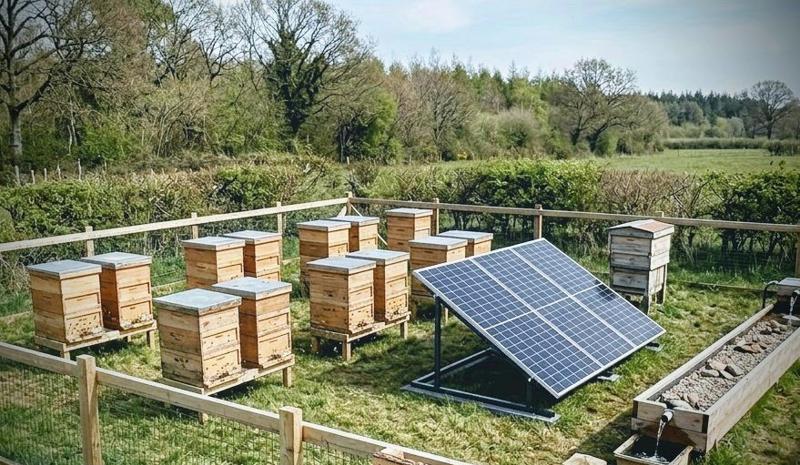
- Low-impact micro-apiaries of 2 to 8 hives
- Registration
- National Bee Unit apiary, ID 100414
How we work
Breeding, pollination and bio-security
Services for beekeepers and the public
Queens and breeding
Mated native Welsh black bee queens from our survivor stock, £45 including VAT and delivery, dispatched June to July 2027.
Reserve a queenSwarm collection
Found a honeybee swarm in the Gwent area? We collect swarms and rehome them in our apiaries.
Swarm collectionPollination partnerships
Micro-apiaries for councils, land trusts, farms and nature reserves.
Talk to us